EU Reform Implementation Challenges: Why New Laws Fail at the Local Community and Business Level
The European Commission's report highlights partial progress on Ukraine's public administration recommendations. The primary obstacle to tangible results remains the procedural gap between passing legislation and creating workable implementation mechanisms.
 🧠AI Analysis
Photo: Ukrainska Pravda
Key points
- The EC report highlights partial fulfillment of public administration recommendations by Ukraine.
- Specialized courts and waste management reforms face delays due to missing secondary legislation and resources.
- Experts recommend involving local communities and business leaders early in the legislative process.
The report published by the European Commission regarding Ukraine acknowledged progress in public administration; however, most prior recommendations remain only partially fulfilled. A systemic issue in Ukraine's European integration process continues to be the disconnect between legal adoption of decisions and the establishment of practical conditions for their local execution.
Experts emphasize that passing ambitious legislative proposals is rarely accompanied by an assessment of the staffing, financial, and technical capacities of state bodies and local self-government institutions. Without proper secondary regulations and required resources, even key initiatives remain solely on paper, delaying adaptation for years.
Striking Examples of Systemic Gaps
Among the most illustrative examples of stalled or delayed reforms is the operationalization of specialized administrative courts established by law in 2025. Despite being legally created, these judicial bodies have not begun functioning due to a lack of court staff, appointed judges, and adequate funding. Consequently, citizens and legal entities are denied full access to administrative justice in disputes involving central state authorities.
A similar issue persists in environmental regulation. The waste management law, which took effect in July 2023, still lacks a complete framework of secondary regulatory acts. Due to missing procedures, businesses and local municipalities are forced to navigate legal loopholes independently, postponing the anticipated environmental outcomes.
The Need to Involve Practitioners
To address this ongoing pattern, experts urge policymakers to involve business representatives, local self-government officials, and industry specialists during the initial concept drafting stage. Early evaluation of realistic implementation capacities will prevent continuous timeline revisions and the inefficient allocation of taxpayer funds.
Source Ukrainska Pravda — pravda.com.ua/columns/2026/11/23/8064137/ ↗
Read next
Rivne Announces Road Repairs and Street Cleaning: Traffic Delays Expected
Municipal services in Rivne have launched a series of road and sidewalk repairs, storm drain maintenance, and mechanized street cleaning.
 🛡️Security
Western Intelligence Warns: Russia Preparing to Deploy Nuclear Weapons in Space
NATO intelligence services warn that Russia may launch a satellite equipped with a nuclear warhead into low Earth orbit in the coming weeks.
 🚌Transport
Rivne Region Records Nearly 4,800 Flu and ARVI Cases in a Week
Between November 16 and 22, Rivne region registered 4,774 cases of influenza and acute respiratory viral infections, with children accounting for the majority.
 🚌Transport
Snow and Daytime Frosts: How Changing Weather in Western Ukraine Will Impact Traffic in Rivne
Unstable weather with snowfall, rain, and temperature swings ranging from -3 to +6 degrees Celsius is forecasted for western Ukraine this week. Local drivers and pedestri…
 🚌Transport
Mild December Forecast: Weather Trends and Road Conditions Ahead for Rivne
Meteorologists project a warmer-than-average December across Ukraine. Frequent freeze-thaw cycles and wet snow could pose challenges for Rivne's transit network.
 👥Society
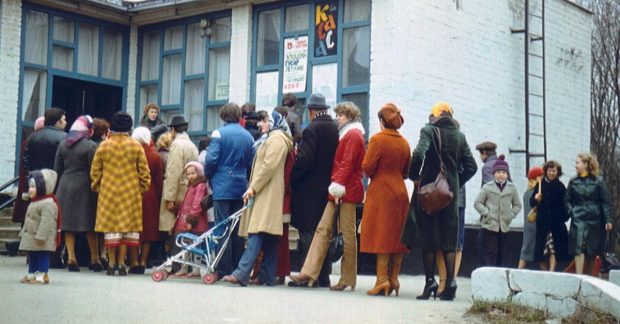
Domestic Evolution: How Life in Rivne Has Changed Over the Last Forty Years
An analysis of the transformation of daily habits among Rivne residents, comparing the experiences of the 70s-80s generation with today's digital capabilities.