Lush Begonia Blooming: Proper Feeding and Care Guidelines for Indoor Plants
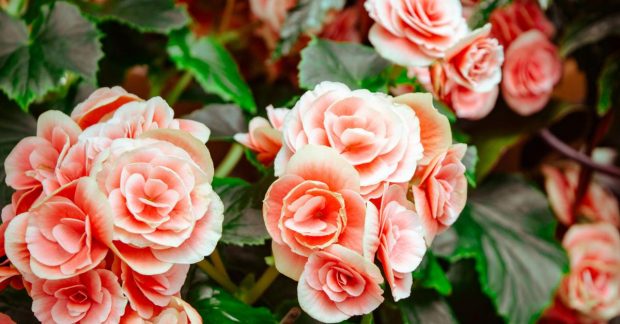
Experts share essential tips on how to feed indoor begonias correctly to ensure abundant flowering and healthy plant development.
 🎭Culture & Sport
Photo: UNIAN
Key points
- Indoor begonias require frequent nutrient replenishment due to limited pot soil.
- Nitrogen should be replaced with phosphorus and potassium during the blooming stage.
- Always apply fertilizers to pre-moistened soil to protect plant roots.
- Stop all fertilization completely when the plant enters its dormant phase.
Indoor begonias are beloved for their vibrant and delicate flowers, but the limited soil volume in typical pots means essential nutrients wash away quickly. Without regular and proper fertilization, these plants lack the energy required to form lush buds and maintain healthy growth throughout their lifecycle.
Choosing the Right Fertilizers for Every Growth Stage
There is no single universal fertilizer for begonias, as requirements change depending on the plant's growth phase. When the plant emerges from winter dormancy and begins to develop green foliage, balanced NPK fertilizers containing equal parts of nitrogen, phosphorus, and potassium are recommended. Once budding begins, nitrogen should be removed to prevent excess leaf growth, shifting the focus entirely to phosphorus and potassium.
During the active blooming phase, superphosphate or potassium monophosphate work exceptionally well. Crucially, fertilizers must always be applied to damp soil by watering the pot with plain water beforehand, which protects the root system from chemical burns and ensures optimal nutrient absorption.
Frequency and Safe Dosage Guidelines
Liquid fertilizers are generally superior for potted indoor flowers because the roots absorb them almost immediately. Standard feeding is recommended every 10 to 14 days until the flowering period concludes.
Experts note that for exceptionally lush blooms, feeding can be done weekly provided the concentrate is diluted with water four times more than the manufacturer's standard recommendation.
Organic alternatives such as bone meal, seaweed extract, wood ash, or compost can also support vibrant growth. Once the flowers drop, the begonia enters a natural resting phase, and all fertilization must be paused until the next blooming cycle begins.
Source UNIAN — unian.ua/lite/advice/chem-podkormit-begoniyu-dlya-cveteniya-polezno… ↗
Read next
 🧠AI Analysis
Russian Drone Attack on Dymer Residential Building Kills 11, Two Missing
A Russian Shahed drone attack destroyed an entrance of a five-story apartment building in Dymer, Kyiv region, killing 11 people and leaving two missing. Search operations…
 🧠AI Analysis
Western Intelligence Warns of Russian Plans to Deploy Orbital Nuclear Weapon
Western intelligence agencies report that Russia has assembled the 'Sputnik-S' satellite designed to carry a nuclear payload into orbit. A potential launch this year coul…
 🏛️Politics
Ukraine's Constitutional Court Reaches Minimum Quorum with Just 12 Judges Left
Following the end of Judge Viktor Horodovenko's term, the number of serving judges at the Constitutional Court of Ukraine fell to the bare minimum of 12. This leaves the …
 🛡️Security
Expanding the Geography of Operations: Experts Assess Strikes on Russian Assets in the Baltic
Recent drone attacks in the Kaliningrad region and the Gulf of Finland indicate qualitatively new capabilities of Ukrainian forces. According to specialists, such operati…
Two Teenagers Hospitalized After Motorcycle Crashes Into Guardrail in Dubrovytsia
A severe road accident involving minors occurred in the northern Rivne region. Two youths were hospitalized after an unlicensed 16-year-old driver crashed a motorcycle in…
 🧠AI Analysis
European Labor Unrest: How Strikes in Germany, Italy, and Spain Shape the Economic Landscape
German metalworkers have launched major strikes over wage disputes, while Italy and Spain face widespread labor protests and demonstrations.